Website Design and Digital Marketing Company for a Strong Online Presence
Your website is often one of the first places potential customers visit when they want to learn about your business. A professional website should communicate what you offer, explain why it matters and make it easy for visitors to take the next step. Digital marketing helps bring relevant audiences to that website through search, advertising, content and other online channels. When website design and digital marketing are planned together, businesses can create a more consistent customer journey.
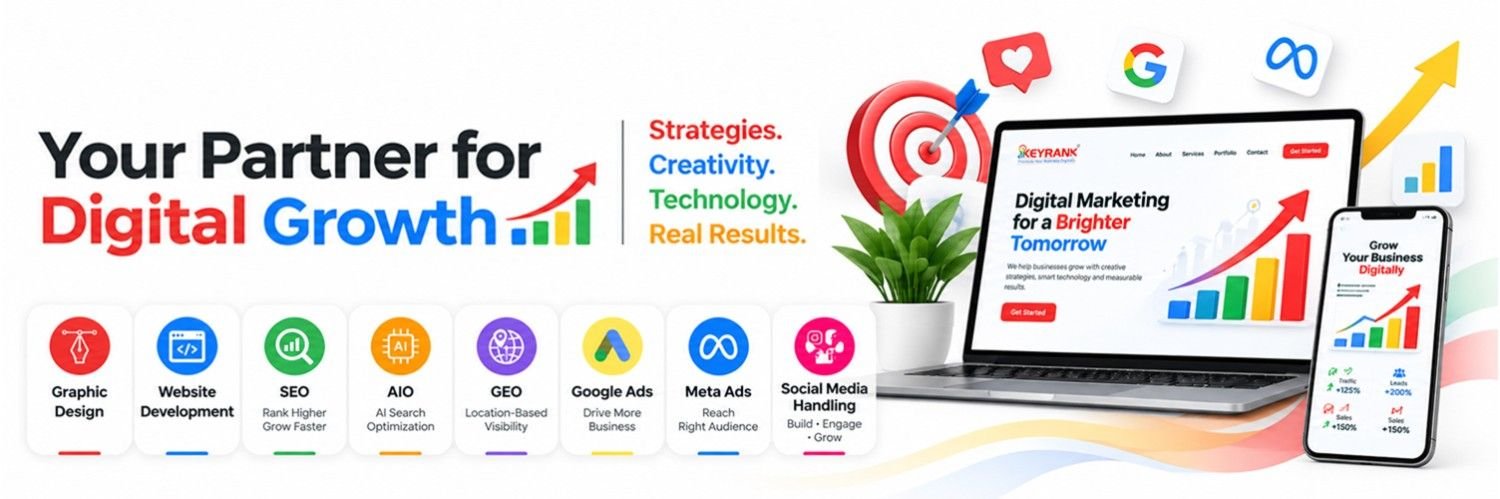
Keyrank Web Solution supports businesses looking to strengthen their online presence with website-focused planning and digital marketing services. The goal is not simply to launch a visually attractive website. The website should also be usable, accessible across devices, organized around customer needs and prepared for ongoing improvement through marketing and performance data.
Website Design Services for Modern Businesses
1. Responsive Website Design
A responsive website adapts its layout to different screen sizes, including mobile phones, tablets and desktop computers. Navigation, text, images, forms and buttons should remain usable across devices. Mobile usability is particularly important because visitors may discover a business while searching on a phone. A design should make key information and contact options easy to find without unnecessary scrolling or confusing interactions.
2. Business and Service Websites
A business website should provide a clear overview of the company, its services, relevant experience and ways to get in touch. Service pages should explain what is offered, who it is for, how the process works and what a potential customer can do next. A clear page structure helps visitors find information without needing to contact the company simply to understand the basic offer.
3. Landing Pages and Lead Generation
Landing pages are designed around a particular campaign, service or audience. They should match the message that brought visitors to the page, explain the offer and provide a suitable call to action. Depending on the business, this could be a consultation request, inquiry form, phone call or product purchase. Forms should request only the information needed for the next step and should be tested on mobile and desktop devices.
4. Website Structure and Navigation
Clear navigation helps visitors understand how the website is organized. Important pages should be reachable through logical menus and relevant internal links. Related services may be grouped into categories, while supporting articles can link to appropriate service pages. A sensible structure also helps search engines discover and understand the relationships between pages.
5. Website Performance and Maintenance
Website quality includes more than appearance. Broken links, oversized images, unnecessary scripts, confusing redirects and outdated information can affect usability. Technical reviews can identify issues that should be addressed by the development team. Regular maintenance can also include checking forms, updating service details, reviewing security and ensuring that important pages continue to work correctly.
Digital Marketing Services That Support Your Website
1. Search Engine Optimization
SEO helps search engines understand website content and can improve the opportunity for relevant pages to appear in organic search. Work may include keyword research, technical SEO, page titles, headings, internal linking, content improvements and search performance analysis. The strategy should connect relevant searches with pages that genuinely answer the users needs.
2. Local SEO
Local SEO can support businesses that serve customers in defined geographic areas. Useful activities may include accurate business details, a complete Google Business Profile, relevant location pages and clear contact information. Location content should be based on actual service coverage and provide meaningful information for customers in that area.
3. Paid Digital Advertising
Paid advertising can help businesses promote selected products or services to relevant audiences. Campaign planning involves choosing the target audience, selecting keywords or placements, preparing ad messages, setting budgets and creating suitable landing pages. Performance should be monitored through meaningful measures such as qualified inquiries, conversion rate and cost per conversion where reliable tracking is available.
4. Content Marketing
Useful content helps answer customer questions and supports decisions at different stages of the buying process. Depending on the business, this may include service descriptions, guides, comparison pages, educational articles and frequently asked questions. Content should be original, accurate and clearly organized. It should help the audience rather than exist only to repeat keywords.
5. Analytics and Conversion Tracking
Analytics can show how people reach the website and what they do after arriving. Where configured correctly, tracking can record form submissions, phone clicks, purchases or other business actions. These insights can help identify whether the main opportunity lies in increasing relevant traffic, improving a landing page or making the inquiry process easier.
Why Combine Website Design with Digital Marketing?
Website design and digital marketing influence different parts of the same journey. Marketing can introduce potential customers to the business, while the website explains the offer and helps them take action. If an advertising campaign sends visitors to an unclear page, the campaign may not perform as expected. If a website is well designed but difficult to discover, it may receive less relevant traffic than the business needs.
Planning both together helps align page content, search intent, campaign messages and conversion paths. It also makes it easier to decide which pages should be created first, what information should be prioritized and how performance will be evaluated after launch.
Our Website and Digital Marketing Workflow
- Discovery: Understand the business, services, audience, competitors and primary objectives.
- Website planning: Organize page structure, content requirements, navigation and conversion paths.
- Design and development: Build responsive pages and test important functions across devices.
- SEO preparation: Review titles, headings, indexability, internal links, URLs and relevant content.
- Marketing setup: Select suitable channels and prepare campaigns or content according to the agreed scope.
- Measurement and improvement: Monitor performance and prioritize changes based on user behavior and business goals.
How to Choose the Right Website and Marketing Partner
Before selecting a provider, clarify the website scope, page count, design responsibilities, content requirements, hosting and maintenance arrangements. For marketing, confirm the channels included, deliverables, reporting frequency and whether advertising spend is separate from service fees. Ask who owns the website, domain, analytics and advertising accounts after the project is completed.
A good working relationship also depends on clear communication and realistic expectations. Website launches and marketing campaigns can support business growth, but neither guarantees a fixed number of visitors, leads or sales. Results depend on the offer, market, competition, implementation quality and customer experience.
Frequently Asked Questions
Should I design a website before starting digital marketing?
A business needs a suitable destination for its marketing activity, but the exact sequence depends on the current website. If the existing site works well, improvements may be enough. If it has major usability or technical issues, addressing them before expanding campaigns may be more practical.
Is SEO included in website design?
Some website projects include basic SEO preparation, such as clear headings, descriptive page titles, mobile-friendly layouts and crawlable navigation. Ongoing SEO usually requires additional research, content improvements, technical monitoring and performance analysis. Confirm the exact scope before work begins.
How long does website development take?
The timeline depends on page count, design complexity, functionality, content readiness and feedback cycles. A simple business website generally has different requirements from an ecommerce platform or a custom web application.
Which digital marketing channel is best for my business?
The right channel depends on how customers discover and evaluate your services. SEO may support long-term organic discovery, paid advertising can target selected audiences, and content can answer customer questions. Channel selection should follow the business objective and available budget.
How do I measure website and marketing success?
Useful measures can include relevant organic traffic, search impressions, campaign performance, inquiry submissions, conversion rate and sales where tracking is available. Choose measures that connect to your actual business objectives rather than focusing on traffic alone.
Build a Website That Supports Business Growth
Keyrank Web Solution can help you plan a website and digital marketing approach that fits your business goals. Whether you need a new business website, improvements to existing pages or a more organized online marketing strategy, start by identifying your audience, primary services and the outcomes you want to measure.